
A deep candidate pool
The most populous country in the region with a very young demographic profile. For group recruitment of 20–50 people availability is real, not just declared.

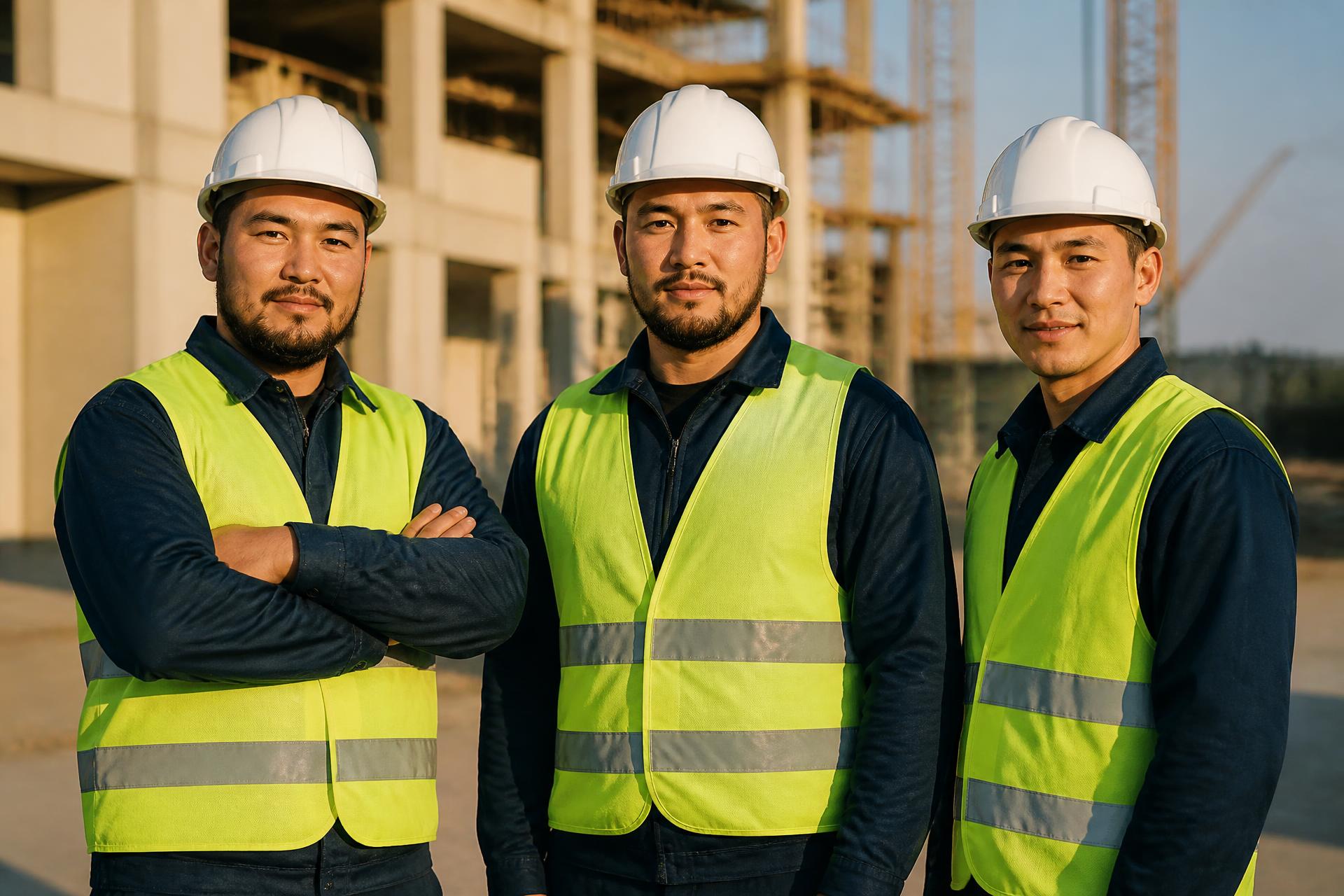
 Recruitment from Uzbekistan
Construction, manufacturing, garment production, logistics and agriculture – 37 million people, a median age below 30 and a generation with real contract experience in Russia, Kazakhstan, Türkiye and Korea. We run the whole process: sourcing, Employment Agency (AVRM) labour market check, single permit for residence and work, national D visa in Tashkent and relocation – usually in 1–3 months.
Uzbekistan · Central Asia
Uzbekistan is the most populous country in Central Asia – around 37 million people with a median age below 30. Every year more people enter the labour market than the economy can absorb, which is why labour migration is part of state policy rather than a marginal phenomenon. For a Macedonian employer that means a deep pool of working-age candidates and genuine availability even for larger, multi-batch projects.
Uzbeks have been working abroad for decades: in Russia, Kazakhstan, Türkiye, the UAE and – under the EPS programme – in South Korea. These are candidates who know what a contract, shift work, a production target and life in worker accommodation mean. Russian remains a common working language, so an Uzbek team integrates smoothly wherever Ukrainian, Belarusian or Moldovan colleagues already work.
Uzbekistan is not covered by the simplified declaration route, so we run the full path: Employment Agency (AVRM) labour market check, single permit for residence and work and a national D visa at the Embassy of North Macedonia. The post accepts applications only through the e-konsulat system and appointment slots are allocated by draw – no intermediary can speed that up. We say this openly at the offer stage, because this is the step that decides whether the schedule closes in one or three months.
1–3
months from contract to the first day at work
37 m
people – the largest market in Central Asia
RU
Russian as the team's working language
100%
legal employment and residence
Other directions
We also recruit from Philippines, India, Nepal, .
See all directionsBenefits
The most populous country in the region with a very young demographic profile. For group recruitment of 20–50 people availability is real, not just declared.
Russian is still widely spoken, especially among candidates returning from Russia and Kazakhstan. The team joins a Russian-speaking crew without a silent period.
Work in Russia, Türkiye, the UAE and South Korea has taught candidates discipline, working to targets and living within an organised accommodation system.
Uzbek construction crews have worked on major regional projects for years – from structural work to finishing, tiling and installations. This is the strongest side of the direction.
Uzbekistan is one of the world's largest cotton producers, with a developed garment sector and fruit and vegetable processing. Sewing machine operators are a ready-made talent pool.
Labour migration in Uzbekistan is formalised and run through the external labour migration agency and local training centres, so candidate documentation is well organised.
Qualifications
Vocational education in Uzbekistan is centralised and can be verified on documents. Every profile you receive includes a scan of the diploma or certificate, professional licences, employment references and an assessment of Russian and English levels.
Vocational colleges and technical schools
A network of vocational colleges trains welders, fitters, electricians, mechanics and machine operators. The programme includes work placements, so a graduate does not start learning at the machine in North Macedonia.
Pre-departure training centres
State centres prepare candidates for work abroad: language basics, health and safety and workplace culture. We verify these certificates together with the professional documents.
Employment references and foreign contracts
We check tenure on specific sites and in specific plants – in Russia, Kazakhstan, Türkiye, the UAE and South Korea. A foreign contract in a CV is our starting point for verification, not a recommendation in itself.
C+E licence and code 95
An Uzbek driving licence does not permit professional transport in the EU. We plan the licence exchange after the single permit for residence and work, plus initial qualification and the code 95 entry – in parallel with legalisation, so no weeks are lost.
The region of origin genuinely shapes the professional profile – we match it to the role.
Tashkent and Tashkent region
The country's largest agglomeration: manufacturing, logistics, construction and services. Best candidate availability and the shortest route to the embassy and the airport.
Fergana Valley: Fergana, Andijan, Namangan
The most densely populated region and the main source of labour migration. Construction, manual work, garment factories and agriculture – the highest readiness to relocate.
Samarkand and Bukhara
Crafts, construction and finishing works plus tourism and hospitality. Candidates with customer-facing and precision-work experience.
Kashkadarya and Surkhandarya
Gas and chemical industry, maintenance, safety-critical work and seasonal agriculture.
Khorezm and Karakalpakstan
The most economically challenged region with high motivation to relocate. Agriculture, processing, warehouse work and simple production roles.
We run the process in five stages: consultation, quotation and contract; sourcing and pre-selection in Uzbekistan; Employment Agency (AVRM) labour market check and single permit for residence and work; national D visa in Tashkent; relocation and onboarding. Each stage has a clear document scope and a realistic time range – we describe the consular stage honestly, because Tashkent slots are drawn and do not depend on the agency.
1–3 months
from contract to the first day at work
5 stages
one coordinator runs the entire process
100%
compliance with Macedonian authority requirements
Фази на процесот
Needs analysis, role profile, quotation and schedule. The process starts once the contract is signed and the job description approved.
Consultation and needs analysis
Week 1We agree the scope of duties, required qualifications, pay, shift system and accommodation conditions.
Quotation and schedule
Week 1–2We present the full budget, stage deadlines and planned arrival batches.
Contract and job description
Week 2Contract signature and approval of the job description in Russian – the document sourcing is based on.
Sourcing and verification in Tashkent, the Fergana Valley and Samarkand – experience, qualifications and Russian level.
Candidate pre-selection
Week 2–5Our local partner sources candidates and verifies employment records, qualifications and references from foreign contracts.
Shortlist and selection
Week 4–6We present a shortlist with qualifications and language assessment. Video interviews are arranged on request.
The governor's statement where required, and the single permit for residence and work application at the Ministry of Interior (MVR).
Labour market test
Week 3–6Where the role requires it: job offer filed with the county labour office and the governor's statement issued.
Decision: single permit for residence and work
Week 5–13Application at the Ministry of Interior (MVR); a decision typically takes 30–60 days depending on the region.
Registration in e-konsulat, waiting for the allocated slot, full document set, medical checks and insurance, application in Tashkent.
e-konsulat registration and slot
Week 10–18Applications registered in e-konsulat and waiting for the slot allocated by the embassy. This is the least predictable stage of the process.
Medicals, documents and visa application
Week 14–20Medical checks, insurance, translations and submission of the national D visa application at the Embassy of North Macedonia, then passport collection.
Flight, airport transfer, accommodation, EMBG, bank account and onboarding at the workplace.
Tickets and transfer
Week 16–21Flights from Tashkent, Samarkand or Urgench, airport transfer and the group met by a coordinator.
Accommodation and registration
First weekHousing that meets sanitary requirements, residence registration, EMBG application and a bank account.
Health and safety and onboarding
First weekHealth and safety training with Russian interpretation, workstation instructions, a buddy in the team and first days supervised by the foreman.
Support and 90-day review
Month 1–3Ongoing contact with the coordinator, support with residence matters and a cooperation review after three months.
Типичен распоред
Од договорот до првиот работен ден – обично 1–3 месеци
Consultation, quotation and contract
01Sourcing and pre-selection in Uzbekistan
02Labour market test and single permit for residence and work
03e-konsulat, medicals and national D visa
04Arrival and first day at work
05Рокот од 1–3 месеци зависи од фактори надвор од наша контрола – капацитетот на надлежните органи, конзулатите и амбасадите, оптовареноста на визните системи и времето на одлучување по барањата.
Трошоци за вработување
Official fees in North Macedonia
EmployerSingle permit for residence and work application and administrative fees at the Ministry of Interior (MVR).
Visa fee
Employer / agencyConsular fee for the national D visa at the Embassy of North Macedonia. The post does not use visa centres, so there are no intermediary fees.
Translations and documents
Employer / agencySworn translations of diplomas, licences and employment records, medical checks and candidate insurance.
Flight and relocation
EmployerAir ticket from Tashkent, Samarkand or Urgench, airport transfer, initial accommodation and starter equipment.
Drivers: licence exchange and code 95
Employer / agencyFor professional drivers only: licence exchange, initial qualification and the code 95 entry in North Macedonia.
Agency fee
EmployerRecruitment, management of the administrative and consular process and coordinator support after arrival.
We do not quote a single price per worker – the budget depends on the role, headcount and region. It always consists of the same items, so agency offers can be compared without hidden costs. For Uzbekistan keep two things in mind: the Tashkent visa slot is drawn and affects the schedule, and for drivers the licence exchange and code 95 are added. We include both in the quotation from day one.
Подготвени за старт
Industries
Uzbekistan is an agricultural and industrial economy with a very strong construction and textile tradition. Below are the industries where this direction delivers the best results.
Uzbek construction crews have worked on large regional projects for years. Candidates know work at height, rebar and formwork, as well as finishing: tiling, plastering and installations.
Machinery, chemical and metal plants supply machine operators, welders and fitters used to shift work and quality control.
Uzbekistan is one of the world's largest cotton producers, with spinning mills and garment factories. This is a rare opportunity to recruit experienced sewing machine operators.
Professional drivers experienced on routes to Russia, Kazakhstan and Türkiye, plus warehouse staff from distribution centres in Tashkent.
Cotton, fruit, vegetables and drying plants – candidates know seasonal work, harvesting, sorting and packing as well as agricultural machinery.
The gas and chemical sector in the south trains mechanics, electricians and maintenance staff used to strict safety regimes.
If you need candidates with strong English for customer-facing roles, the Philippines or Sri Lanka usually work better. We use Uzbekistan where group availability, construction experience and a shared language with a Russian-speaking team matter most.
Roles
The strongest side of this direction is construction and finishing work, manufacturing, garment production and food processing. Warehousing, transport and agriculture also work well. Video interviews with candidates are arranged on request.
Need a faster process or candidates who do not require a national visa? See also workers from Georgia, workers from Kazakhstan or workers from the Philippines.
Typical differences in the process and candidate profile.
| Criterion | Uzbekistan | Other directions |
|---|---|---|
| Candidate profile | Construction, manufacturing, garment, agriculture | More often light manufacturing or English-speaking roles |
| Working language | Russian – shared with Eastern European teams | Basic English or no shared language |
| Employment basis | Single permit for residence and work and national D visa | Declaration (Georgia) or full procedure with legalisation |
| Process time | 1–3 months – the visa slot is drawn | 3–6 weeks (Georgia) or 1–3 months (South Asia) |
| Group availability | Very good – the region's most populous country | Limited for narrow specialisations |
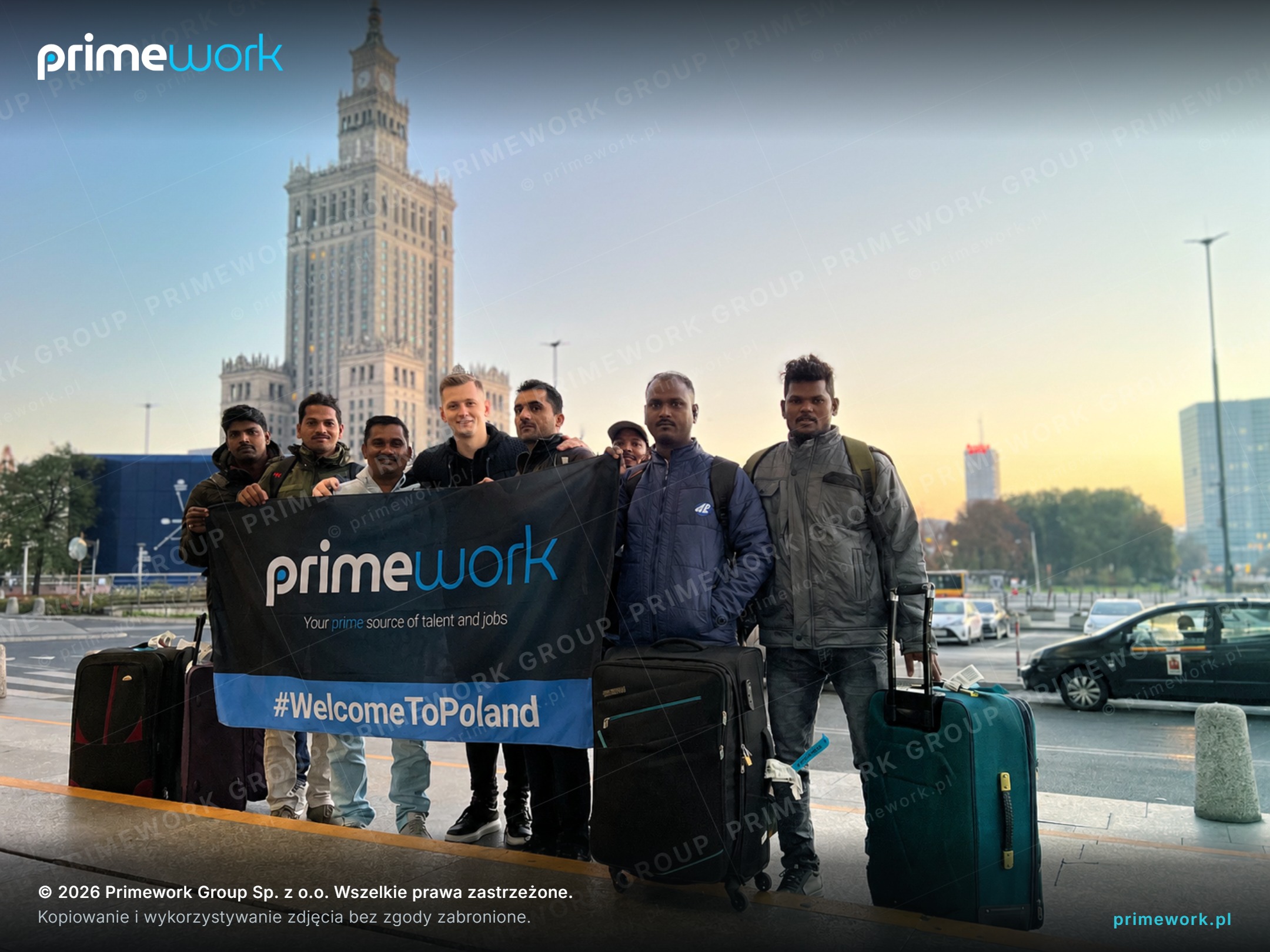
Cultural integration
Teams from Uzbekistan settle in quickly because the biggest barrier – language – disappears, and both climate and work rhythm are close to Macedonian ones. What remains are a few organisational points worth setting up from the start; get them right and the first year runs without turnover.
Russian yes, Macedonian learned on site
Shared Russian solves communication inside the team, but documents, training and dealings with authorities are in Macedonian. Workstation instructions in two languages and a basic Macedonian course after shifts close the gap within weeks.
Moderate Islam and Ramadan
Uzbekistan is a secular state, but most of the team avoids pork and some fast during Ramadan. A canteen alternative, kitchen access in the accommodation and flexible rostering during that period cost little and mean a lot.
Residence formalities and remittances
Registration, EMBG, a bank account and residence registration application fill the first weeks, when the worker needs support. Cheap remittances home matter too – point to a proven option straight away instead of leaving it to chance.
Hierarchy and the foreman's role
Respect for supervisors is strong in Uzbek work culture, but it does not encourage raising problems. A clear message that questions and fault reports are welcome, plus one group leader as the contact point, is the simplest way to avoid silent turnover.
Short answers to questions about recruiting workers from Uzbekistan.
Direction: UzbekistanWe start with a conversation about your needs, a quotation and a contract. Only then do we launch sourcing, the Employment Agency (AVRM) labour market check, the single permit for residence and work and the national D visa – with an agreed arrival schedule.
Realistic time from contract to the first day at work: 1–3 months.