
Production line experience
Industrial parks in Hawassa, Adama and Addis Ababa manufacture for global brands. Candidates know shift work, output targets, quality control and plants employing hundreds of people.

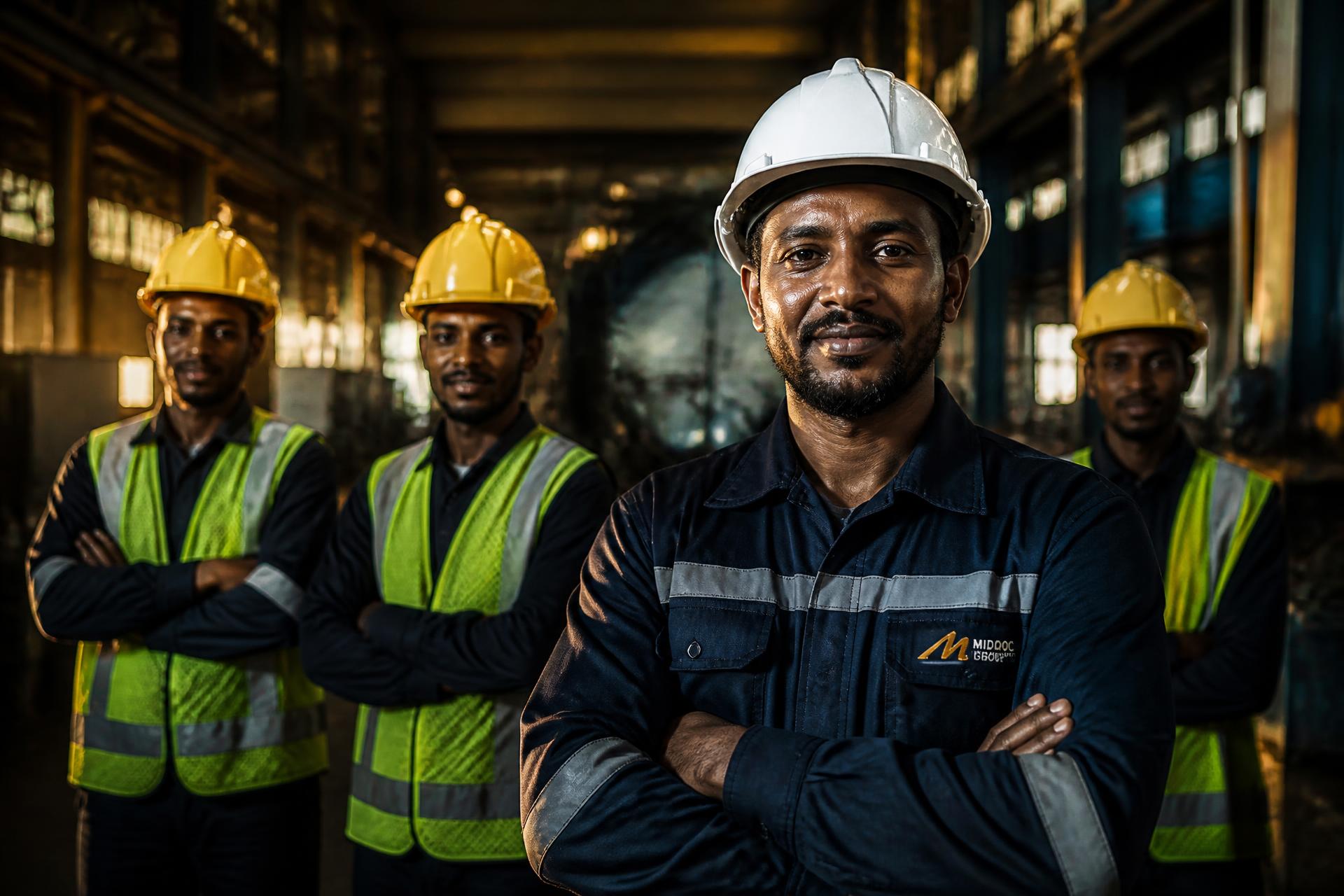
 Recruitment from Ethiopia
Ethiopia is Africa's youngest large labour market and a country that spent a decade building industrial parks for export manufacturing. We run the whole process: sourcing and COC certificate verification, the Employment Agency (AVRM) labour market check, the single permit for residence and work, the national D visa in Addis Ababa, plus relocation and onboarding in North Macedonia.
Ethiopia · East Africa
Ethiopia has over 120 million inhabitants and one of the youngest labour markets in the world, with a median age in the early twenties. For an employer that means a very large pool of candidates ready for multi-year contracts, including the manual roles that are hardest to fill in North Macedonia.
Over the past decade the country built a network of industrial parks — Hawassa, Bole Lemi in Addis Ababa, Adama, Kombolcha and Dire Dawa — geared towards export manufacturing for clothing and footwear brands. That trained an entire generation of workers used to shift work, output targets, quality control and production line discipline.
Qualifications come from the TVET system: polytechnics and technical schools finish with a practical exam and a COC certificate confirmed by the federal agency. Documents are issued in English, and English is the language of instruction in Ethiopian secondary schools and universities, so technical documentation is not a barrier.
Formally, Ethiopia requires the full path: an Employment Agency (AVRM) labour market check, a single permit for residence and work issued by the Ministry of Interior (MVR) and a national D visa filed at the Embassy of North Macedonia in Addis Ababa. One coordinator runs the entire process and you get a single schedule with stage deadlines.
4–6
months from contract to the first day at work
120m
inhabitants and a very young labour market
COC
competence certificates from the TVET system
100%
legal employment and residence
Other directions
We also recruit from Philippines, India, Nepal, .
See all directionsBenefits
Industrial parks in Hawassa, Adama and Addis Ababa manufacture for global brands. Candidates know shift work, output targets, quality control and plants employing hundreds of people.
Qualifications confirmed by a practical exam and a competence certificate issued in English. We verify them with the issuing body, not just in the candidate's file.
English is the language of instruction in secondary schools and universities. TVET graduates read work instructions and technical documentation; we describe each person's spoken level in their profile.
A median age below 25 and a huge pool of candidates ready for long contracts. It is realistic to staff a full shift rather than patch individual gaps.
Ethiopia is Africa's second largest cut flower exporter and its biggest coffee producer. Candidates know greenhouses, harvesting, sorting lines and cold stores under export regimes.
We work exclusively with agencies licensed by the Ethiopian Ministry of Labour and Skills, applying a zero fee policy for candidates. That protects the employer's reputation and team stability.
Qualifications
Each candidate profile includes a scan of the TVET diploma and COC certificate, an employment history with named plants, references, an English level assessment and — for technical trades — documentation of a practical skills test.
COC competence certificate
A national certificate issued after a practical exam in welding, electrical, mechanical, construction and sewing trades. We confirm it with the issuing body and provide a sworn translation.
Polytechnic and TVET school diplomas
Ethiopian polytechnics train technicians and operators in programmes combining theory with plant practice, often inside industrial parks, so graduates have documented shop-floor hours.
Employment history and references
We check work at named employers: garment and footwear factories, construction, logistics, flower farms and hotels. References are confirmed by phone.
English level and optional practical test
A video interview assessing communication. For welders and operators, work samples with photographic documentation and visual assessment are available only as an optional paid add-on on client request.
The region a candidate comes from genuinely shapes their professional profile.
Addis Ababa and Bole Lemi
The capital and the largest pool of technicians, warehouse and production staff. Home to the Embassy of North Macedonia and the region's main aviation hub.
Hawassa and the Sidama region
The country's largest industrial park: textiles, garments and line work for export brands. Candidates used to output targets and quality control.
Adama and Bishoftu (Oromia)
Manufacturing, logistics and the rail corridor to Djibouti. Machine operators, mechanics, warehouse and handling staff.
Bahir Dar and Kombolcha (Amhara)
Food processing, textiles and trades. High readiness to relocate and experience in intensive manual work.
Ziway, Sebeta and the Rift Valley
Export agriculture: floriculture, greenhouses, sorting lines and cold stores, working to standards set for the European Union market.
We run the process in five stages: call, quote and contract; sourcing and pre-selection in Ethiopia; Employment Agency (AVRM) labour market check and single permit for residence and work; documents and the national D visa in Addis Ababa; relocation and onboarding. Each stage has a clear deadline and a full document set.
1–3 months
from contract to the first day at work
5 stages
one coordinator runs the whole process
100%
compliance with Macedonian and Ethiopian requirements
Фази на процесот
Needs analysis, role profile, quote and schedule. Sourcing starts once the contract is signed.
Call and needs analysis
Week 1We agree the scope of duties, required certificates, pay and accommodation standard.
Quote and schedule
Week 1–2We present the full budget, stage deadlines and planned arrival batches.
Contract and job description
Week 2Contract signature and approval of the English job description — the same document goes into the visa application.
Sourcing and verification in Addis Ababa, Hawassa, Adama and Bahir Dar — COC certificates, experience, English level.
Candidate pre-selection
Week 2–6A licensed partner sources candidates and verifies COC certificates, TVET diplomas and plant references.
Shortlist and video interviews
Week 5–8We present a documented shortlist. Interviews are held in English with your supervisor, and the language level is stated in each profile.
The governor's statement where required, plus the single permit for residence and work application at the Ministry of Interior (MVR).
Employment Agency (AVRM) labour market check
Week 3–7Filing the vacancy with the district labour office and obtaining the governor's statement where the role requires it.
Decision: single permit for residence and work
Week 6–16Application at the Ministry of Interior (MVR); a decision usually takes 30 to 60 days depending on the region.
Sworn translations, diploma legalisation, medical checks, insurance and the visa application at the Embassy of North Macedonia in Addis Ababa.
Document legalisation and translations
Week 12–18Sworn translations of diplomas and employment certificates, document legalisation, medical checks and insurance.
Visa application in Addis Ababa
Week 15–24Booking the appointment and filing the national D visa application at the Embassy of North Macedonia in Addis Ababa with the full document set.
Flight, airport transfer, accommodation, EMBG, bank account and on-the-job onboarding.
Tickets and transfer
Week 20–26Booking the flight from Addis Ababa, airport transfer and group pick-up by the coordinator.
Accommodation and registration
First weekHousing that meets sanitary requirements, address registration, EMBG application and opening a bank account.
Health and safety training and onboarding
First weekHealth and safety training in English, workstation instructions, a team buddy and supervised first days.
Support and 90-day review
Month 1–3Ongoing contact with the coordinator, support with residence matters and a review after three months.
Типичен распоред
Од договорот до првиот работен ден – обично 1–3 месеци
Call, quote and contract
01Sourcing and pre-selection in Ethiopia
02Employment Agency (AVRM) labour market check and single permit for residence and work
03Document legalisation and national D visa
04Arrival and first day at work
05Рокот од 1–3 месеци зависи од фактори надвор од наша контрола – капацитетот на надлежните органи, конзулатите и амбасадите, оптовареноста на визните системи и времето на одлучување по барањата.
Трошоци за вработување
Official fees in North Macedonia
Employersingle permit for residence and work application and administrative fees at the Ministry of Interior (MVR).
Visa and service fee
Employer / agencyConsular fee for the national D visa and handling of the application at the Embassy of North Macedonia in Addis Ababa.
Legalisation and translations
Employer / agencySworn translations of diplomas, COC certificates and employment records, document legalisation, medical checks and insurance.
Flight and relocation
EmployerAir ticket from Addis Ababa, transfer, initial accommodation and a starter kit including winter clothing.
Exams and licences in North Macedonia
Employer / agencyFor welders, operators and drivers: the EN ISO 9606-1 exam, accredited inspection body licences or driving licence exchange and initial qualification.
Agency fee
EmployerSourcing, handling of the administrative and consular procedure and coordinator support after arrival.
We do not quote a single price per worker — the budget depends on the role, headcount and region. It always consists of the same items, so agency offers can be compared without hidden costs. With Ethiopia, two things drive the schedule: the Ministry of Interior (MVR)'s decision time and visa appointment availability in Addis Ababa. Both are factored into the quote from day one.
Подготвени за старт
Industries
This origin is chosen where repeatable, well-organised line work and a stable shift roster matter most. Industrial park experience means candidates absorb output targets and quality procedures quickly.
Industrial parks in Hawassa, Adama and Addis Ababa produce for global clothing and footwear brands. Shift work, output targets and quality control are everyday routine for candidates.
Addis Ababa's construction boom and infrastructure investment gave candidates experience on large sites: structures, finishing, electrical and sanitary installations.
The Addis Ababa–Djibouti rail corridor and the capital's distribution centres are a real training ground for warehouse staff, forklift operators and handling crews.
Ethiopia exports cut flowers, coffee and vegetables to the European Union. Candidates know greenhouses, harvesting, sorting and cold store work to export standards.
Meat, dairy and coffee processing plants in the Amhara and Oromia regions. Cutting, packing and cold store work without a long ramp-up period.
Addis Ababa hosts the African Union and the continent's largest aviation hub, so its hotels serve international guests and work to chain standards.
If you need the fastest possible start, Georgia will be quicker. We choose Ethiopia where a large, young and stable production crew is the priority.
Roles
This origin delivers most where you need a whole shift rather than individuals: manufacturing, garments, logistics, construction and agriculture. For technical trades we can arrange an optional practical test as a paid add-on on client request.
Considering other origins? See also workers from Kenya, workers from the Philippines or workers from Georgia.
A comparison of typical differences in the process and candidate profile.
| Criterion | Ethiopia | Other origins |
|---|---|---|
| Language | Amharic, English as the language of study — working level | English official (Kenya, Philippines) or a crew leader required |
| Candidate profile | Manufacturing and garments, construction, logistics, agriculture | More often a narrow industrial specialisation |
| Legal basis | single permit for residence and work and national D visa in Addis Ababa | Declaration at the labour office (Georgia) or A + DOLAB (Vietnam) |
| Process time | 4 to 6 months | 3 to 6 weeks (Georgia) or 3 to 5 months (Philippines) |
| Recruitment scale | Very large candidate pool, a full shift is realistic | Large uniform groups are harder to assemble quickly |
Cultural integration
Teams from Ethiopia settle in quickly provided a few things are set up at the start. Below are four points that in practice decide whether the first year passes without turnover.
Climate and the first weeks
Addis Ababa sits at high altitude, but candidates have never experienced sub-zero temperatures. A winter clothing pack on arrival and scheduling outside the coldest weeks genuinely reduce drop-outs.
English versus Macedonian on the floor
English works with management and documentation, but the crew often speaks Macedonian. Bilingual workstation instructions and a basic Macedonian course after arrival close the gap inside the team.
Food, fasting and meals
The diet is based on injera, lentils and vegetables, and many workers observe Ethiopian Orthodox fasting periods, eating only plant-based meals. Kitchen access and a vegetarian canteen option resolve this entirely.
Residence and banking formalities
Address registration, EMBG, a bank account and the renewal of the single permit application fill the first weeks. The coordinator books appointments and tracks deadlines so residence legality is never interrupted.
Short answers to questions about recruiting workers from Ethiopia.
Origin: EthiopiaWe start with a call about your needs, a quote and a contract. Only then do we launch sourcing, the Employment Agency (AVRM) labour market check, the single permit for residence and work and the national D visa in Addis Ababa.
Realistic time from contract to the first day at work: 4 to 6 months.